The short version
Macoun is McIntosh crossed with Jersey Black. It kept the McIntosh aroma and added a sweeter, richer flavor. McIntosh is tarter, arrives a month earlier and is still the best base for fresh cider.
Five points apart on sweetness
Macoun sits at an 8 of 10 on our sweetness scale and McIntosh at a 3. That is the widest gap you will find between a parent and its offspring in our lineup.
Both are aromatic, tender and very juicy, which is the family resemblance. Macoun is the one to eat out of hand. McIntosh is the one to press and cook.
Macoun and McIntosh at a glance
| Attribute | Macoun | McIntosh |
|---|---|---|
| Sweetness | 8 of 10 | 3 of 10 |
| Flavor | Rich, aromatic, sweet-tart | Tangy, tart, strongly aromatic |
| Texture | Crisp, tender, exceptionally juicy | Tender, ultra juicy white flesh |
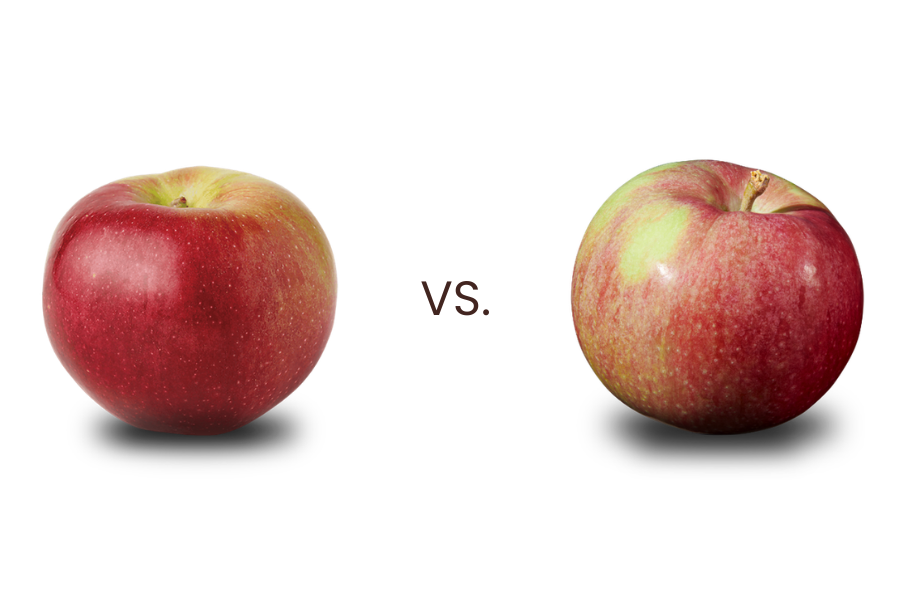
| Appearance | Deep red to dark purple over green | Squat, pink-red over green |
| Harvest | Around October 5 | Around September 5 |
| Availability | October to May | September to June |
| Best for | Fresh eating, salads, cheese boards | Cider, sauce, baking blends |
How they taste
Macoun is the kind of apple people wait all year to find, especially in New York and across the Northeast. It inherited the McIntosh aroma and brings a sweeter, richer taste with an exceptionally juicy bite. The deep red, sometimes almost purple skin makes it easy to spot.
McIntosh is the apple most people picture when they hear the word. Tangy and tart, tender, extremely juicy, with an aroma distinctive enough that candles are made to imitate it. It was discovered in Ontario in the early 1800s, and cooler climates bring its flavor out fully.
Which one to use where
Macoun is at its best fresh. Eat it out of hand, slice it into a salad or pair it with a sharp cheese. The flavor is the whole point, so there is no reason to cook it away.
McIntosh earns its place in the kitchen. It is the go-to base for fresh cider, thanks to its balance of sweetness and acidity and its volume of juice. It also cooks down into excellent applesauce.
When each one arrives
McIntosh harvests around September 5 and ships through June, one of the longer seasons of any variety we handle. Macoun follows about a month later, around October 5.
If you see Macoun in the fall, buy it then. Its following is built on a season people look forward to.
Reach for Macoun if
You want the McIntosh aroma with far more sweetness, you are building a cheese board or a salad, or you want a fall apple worth seeking out.
Reach for McIntosh if
You are making cider or applesauce, you like a tart apple, or you want that classic aroma from early September on.
McIntosh has a big family
Macoun is not the only McIntosh cross in the bin. Empire came from McIntosh and Red Delicious, and Cortland from McIntosh and Ben Davis. See how they compare in Empire vs McIntosh and McIntosh vs Cortland.
Macoun and McIntosh, answered
What are Macoun’s parent varieties?
Macoun is a cross between McIntosh and Jersey Black. It inherited the aromatic McIntosh flavor and added a sweeter, richer taste.
Which is sweeter, Macoun or McIntosh?
Macoun, by a wide margin. It sits at an 8 of 10 on our sweetness scale against McIntosh at a 3.
What is a good substitute for Macoun?
McIntosh is the first recommendation because it is one of Macoun’s parents and shares its aromatic, juicy character. Empire also makes sense, especially in the Northeast.
What is the best apple for cider?
McIntosh is the go-to base. It has an ideal balance of sweetness and acidity plus plenty of juice, which makes for a well-rounded cider.
How do I recognize a Macoun?
Look for deep red to dark purple skin over a green background. The color is darker than a McIntosh, which runs pink-red over green.