The short version
Cortland is a McIntosh cross, which is why they look nearly identical. Cortland is slightly sweeter, holds its shape when cooked and resists browning after slicing. McIntosh is tarter, more aromatic, breaks down into sauce and is the classic base for fresh cider.
Nearly identical in the bin
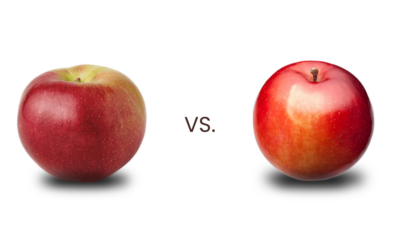
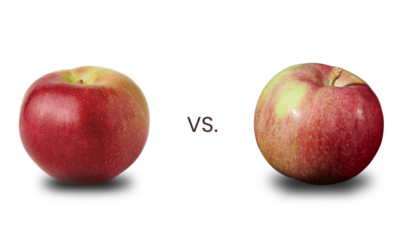
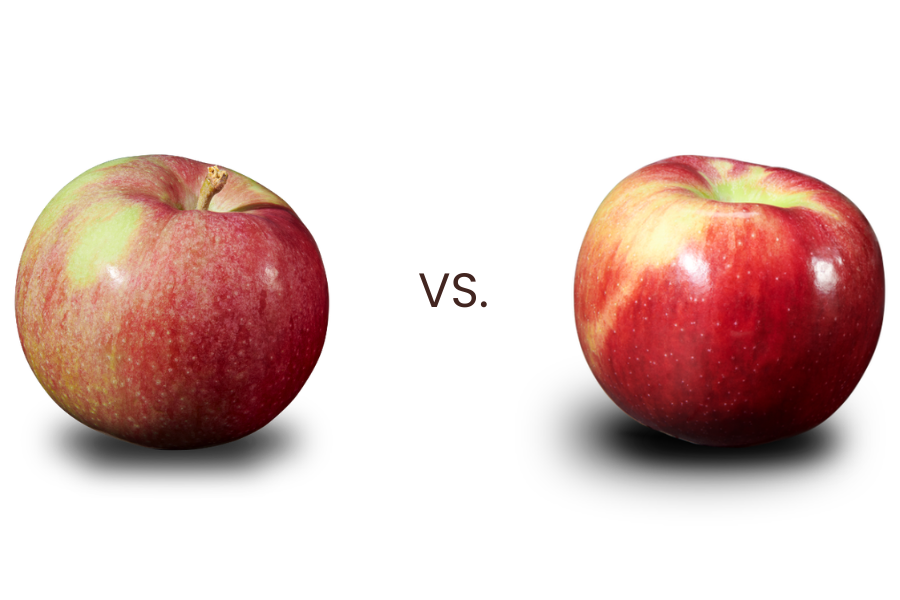
These two are parent and child. Cortland came from crossing McIntosh with Ben Davis, and it kept the squat shape and red-over-green skin almost exactly. Set them side by side in a bin and most people cannot tell which is which.
Both land at a 3 of 10 on our sweetness scale, so this is not a sweet versus tart comparison. The difference shows up in the pan.
McIntosh and Cortland at a glance
| Attribute | McIntosh | Cortland |
|---|---|---|
| Sweetness | 3 of 10 | 3 of 10 |
| Flavor | Tangy, tart, strongly aromatic | Balanced sweet-tart, milder |
| Texture | Tender, ultra juicy white flesh | Crisp, softens readily when cooked |
| Cooked | Breaks down into sauce | Holds its shape better |
| Michigan harvest | Around September 5 | Around September 22 |
| Availability | September through June | September through February |
| Best for | Cider, sauce, baking | Pies, crisps, crumbles, sauce |
| Parentage | Found in Ontario, early 1800s | McIntosh crossed with Ben Davis |
How they taste
McIntosh is tangy and tart with tender, extremely juicy white flesh and an aroma so distinctive that candles are made to imitate it. It is the apple most people picture when they think apple. Michigan cool nights bring the flavor out fully.
Cortland is the gentler one. The Ben Davis side of its parentage takes some of the edge off, so it reads as balanced rather than tart. Less aroma, more sweetness, same familiar shape.
Which one to cook with
This is the real decision.
Cortland holds its shape. Slices stay recognizable in a pie, a crisp, a crumble or a cobbler. It also resists browning noticeably longer than most varieties once cut, which is why it turns up in salads and on fruit trays.
McIntosh breaks down. That is a flaw in a pie and a virtue in applesauce, where you want the fruit to collapse into something smooth. Used alone in a pie, McIntosh can go watery. Used in a blend with a firmer apple, it brings flavor the firm apple lacks.
For cider, McIntosh wins outright. The balance of sugar and acid plus the sheer volume of juice makes it the standard base for fresh cider.
When each one arrives
McIntosh harvests around September 5 and ships through June. Cortland comes about two and a half weeks later, around September 22, and its season runs shorter, generally September through February.
If you are baking in November, both are available. If you are baking in April, you are looking at McIntosh.
Reach for McIntosh if
You are making cider or applesauce, you want the classic tart apple aroma, or you are blending apples for a pie and need one that brings flavor.
Reach for Cortland if
You want slices that hold their shape in a pie or crisp, you are cutting apples ahead for a tray, or you want a slightly sweeter apple with the same familiar character.
Cannot find Cortland
McIntosh is the closest substitute, since the two share most of their traits. If you are baking, add a few slices of a sweeter apple like Fuji or Jonagold to make up for the sweetness Cortland would have brought.
McIntosh and Cortland, answered
Are McIntosh and Cortland the same apple?
No, but they are closely related. Cortland is a cross of McIntosh and Ben Davis, which is why the shape and coloring look almost identical.
Which is better for pie, McIntosh or Cortland?
Cortland. It holds its shape under heat while McIntosh breaks down. McIntosh is better in a blend, where another apple provides the structure.
What is the best apple for cider?
McIntosh is the go-to base. It has an ideal balance of sweetness and acidity plus plenty of juice, which makes for a well-rounded cider.
Which apple browns more slowly after slicing?
Cortland. It is well known for resisting browning, which makes it a favorite for fruit trays, salads and anything sliced ahead of time.
Are either of these good for eating fresh?
Both are, especially McIntosh, which is a popular take-along snack. Just know that both are tart apples, so if you want sweet, look at Gala, Honeycrisp or Fuji instead.